





KOCHI:
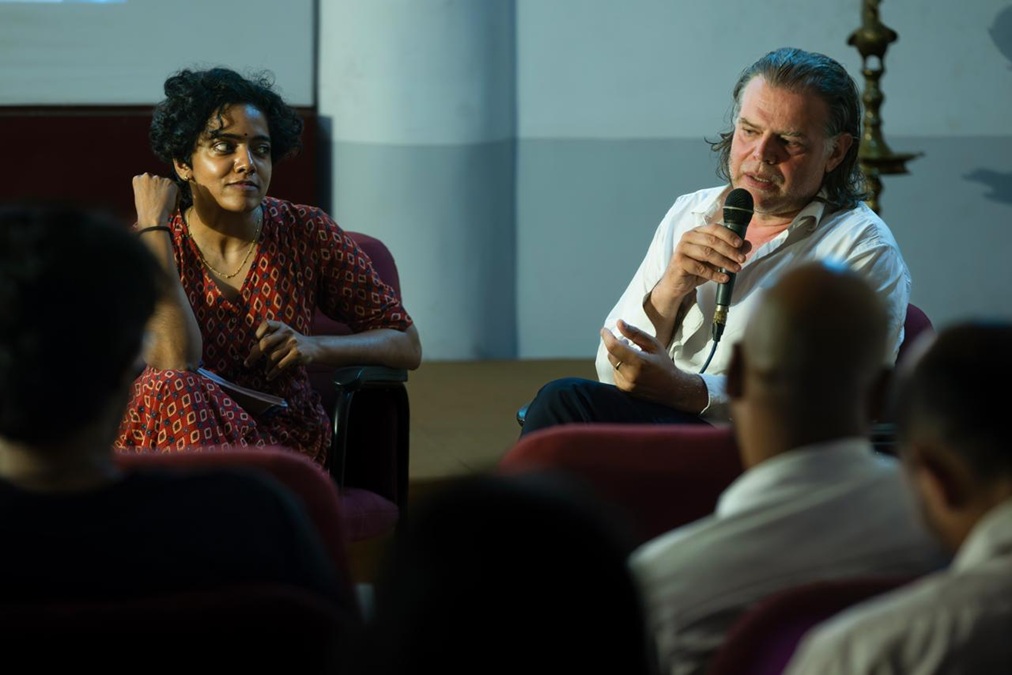
Renowned Dutch artist-filmmaker Renzo Martens said that multinational corporations that run or provide financial support to many of the top museums make huge profits, while the lower classes and erstwhile colonial plantation workers who strive for their products have to live on low incomes without their own land. Martens was speaking at the Let’s Talk session organised by Kochi-Muziris Biennale at RLV College, Tirpunithura.
The event was organised as part of the programming ahead of the sixth edition of KMB which is scheduled to open on December 12, 2025.
Setting the tone for the 100-minute session, titled Connecting Museums to the Plantations that Funded Them, with the screening of his documentary The White Cube, Martens noted that it is a paradox that museums still claim to provide a glimpse into the lives of ordinary people, despite the vast plantations that giant chocolate companies cultivate for their products were bought from poor indigenous peoples at low prices during colonial times.
Cocoa, coffee and tobacco plantations across the world have a similar history, he said. “Swiss chocolate is world-famous. But even today, when I eat a chocolate bar, I feel a little guilty. For, all the cocoa needed for this product comes from poor countries that Western countries used to colonize.” Martens, 51, who is best known for his 2008 film “Episode III: Enjoy Poverty”, and the deeply-polarising white cube project that he initiated in a former palm oil plantation in Eastern Congo, also spoke about the ‘whiteman’s guilt’ that he bears, despite his working class origins.
“White people face the risk of getting bracketed with the world’s elite and rich even as they might be financially unsound and apologetic about certain colonialist practices of their countries,” he said. “I was raised in a working-class family; yet when I recently had a conversation with a friend from this part of the world about certain histories of exploitation, he found an adversary in me,” said Martens, who divides his time between Amsterdam (Netherlands) and Kinshasa (Congo).
The question-answer session was led by KBF Editorial Lead Aswathy Gopalakrishnan. Students and faculty members of RLV College, and members of general public attended the session.


more recommended stories

KOCHI:A quiet but devastating story of.

KOCHI:Each handmade Manchaha (from the heart).

KOCHI:The current assessment of Kochi’s vulnerability.

KOCHI:Former Lok Sabha member Subhashini Ali.

KOCHI:The Students’ Biennale at St Andrew’s.

KOCHI:A three-day Terracotta & Wheel Pottery.

KOCHI:A four-day ‘Soil Assembly’ conference began.

NEW DELHI:Showcasing Kerala as an experiential.

KOCHI:On entering the room, the viewer.

KOCHI:Thai visual artist and documentary filmmaker.
