





THIRUVANANTHAPURAM:
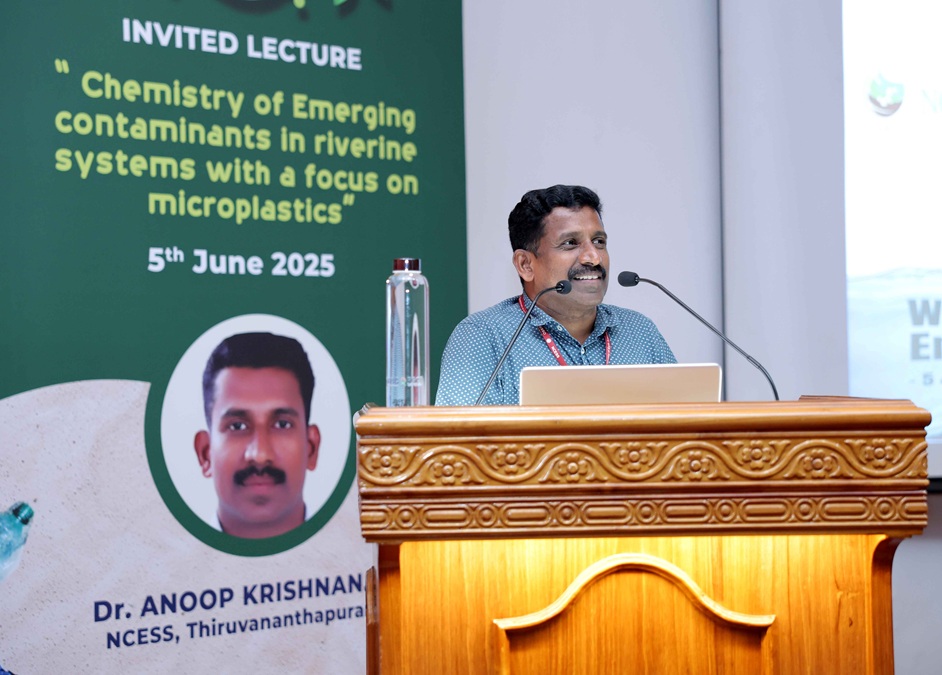
Microplastic pollution has become a grim threat to water bodies globally which needs to be monitored and analysed constantly through the model sampling method to safeguard them from degradation, according to Dr. Anoop Krishnan, Environmental Hydrology Group Scientist of National Centre for Earth Science Studies (NCESS).
Dr. Anoop Krishnan was delivering the invited lecture on ‘Chemistry of Emerging Contaminants in Riverine Systems’ at BRIC-Rajiv Gandhi Centre for Biotechnology (RGCB) here on the World Environment Day.
BRIC-RGCB Director Prof. Chandrabhas Narayana presided over the World Environment Day programmes on the campus.
‘Combating plastic pollution’ is this year’s World Environment Day theme.
“The escalation of microplastic levels in water bodies has reached alarming levels and has become a global concern. NCESS has been conducting sampling process in Kerala’s rivers extensively and it’s a reality that the micro plastic pollution in rivers in the state, including Pamba and Periyar, is a matter of serious concern,” Dr. Anoop said.
Human interventions, discharge of industrial waste and unrestricted use of pesticides are the major sources of microplastic pollution of water bodies,he added.
“Through the sampling process, we can identify the size, structure and degradation patterns of various microplastics present in our water bodies,which could help us find scientific methods to mitigate the issue of microplastic pollution”, Dr Anoop Krishnan said.
Microplastic carries heavy metals and chemicals which can pose serious health hazards and building the awareness about the serious threat it posed to marine and aquatic life is important, Dr Anoop Krishnan noted.
According to the UNEP 2023 report, Global plastic production exceeded 430 million tonnes a year and over two-third of it becomes waste, which means 139 million tonnes of plastic waste find its way into ecosystems, he said.
Though the process of assessing microplastic levels and analysing its effect is being studied in depth the research about the mitigation of its environmental hazards is limited, he noted.
In his presidential address, Prof. Chandrabhas Narayana said unmonitored use of plastic in daily lives needs to be consciously reduced and by finding eco-friendly alternatives.
Idea Contest on Zero Waste Management, book release and distribution of prizes were also held as part of World Environment Day at BRIC-RGCB.


more recommended stories

With each project Parvati Nair takes.

JAMNAGAR: On Sunday, at the Twentieth.

THIRUVANANTHAPURAM: UST, a leading AI and.

BENGALORE:The Bangalore Chamber of Industry and.

MUMBAI:Climate technology, or climate tech, refers.
NEW DELHI: Air pollution levels in.

THIRUVANANTHAPURAM: Collaboration with European Union (EU).
KOZHIKODE:The India-Japan Centre on Climate and.
BUNDI (RAJASTHAN):Marking the occasion of International.
KUTCH (GUJARAT): In a significant step.
