





KOCHI:
The India-UK International Conference organised by the Centre for Public Policy Research in collaboration with the British High Commission in India, assessed the potential and possibilities of the Indo-Pacific region. Issues such as trade and market opportunities in the Indo-Pacific region, security, blue economy and exchange of marine resources were also discussed. And to further strengethen the Indo-Pacific region, the conference also assessed that India and other like-minded countries can work together to preserve a rule-based order in the Indo-Pacific region.
The India-UK Partnership in the Indo-Pacific International Conference kicked off with a inaugural session and welcome remarks presented by CPPR Chairman Dr D Dhanuraj, an inaugural and keynote speech delivered by R Prasannan, Resident Editor, Malayala Manorama and The Week, and concluded with a vote of thanks presented by Neelima, Associate Research, CPPR.
R Prasannan, Resident Editor, Malayala Manorama in his inaugural address said, “We’ve learned the hard way that policing the waters in our region is difficult because they are too formidable for a single country and that peace is a very expensive option, especially when pitted against the waters to the east. We have been making waves in maritime trade and security. For us to be able to construct solutions for problems on other continents, we need to form a regional partnership”.
D Dhanuraj, Chairman, CPPR said, “India and the UK have deep political ties, with strategic and economic partnerships ranging from trade to defence. It is very important to strengthen the bilateral relations between the two countries. The two countries are looking to enhance cooperation and collaboration with one another with the 8th round of Free Trade Agreement talks continuing as we speak”.
The speakers in the inaugural session highlighted the growing relations between India and the UK, the goal to double the trade, its shared history, culture, and passion for sports, and the growing people-to-people connection. Mr. Prasannan had an interactive session with the audience. When discussing the continental problems, he opined that the capabilities required to build outside our continental concerns must be addressed through a regional partnership. He also expanded on the increase in the strategic activities around the trade choke points within the Indo Pacific region which are resulting in growing continental concerns. He iterated the importance of corrective actions by competing powers like India and UK to ensure Indo-Pacific growth and its benefit for all in and around the region.
Trade between India and UK has grown manifolds over the years and Post BREXIT England has a huge scope for engaging with India.The Indo-pacific region today has a great potential and has gained traction after the Euro-Atlantic. UK has come with a decisive determination to come with an integrated review which has a prime focus on the Indo-Pacific. There is a current uproar to provide governance within the region,
especially keeping ocean states in mind, where india and like-minded partners can work together to conserve a rules based order that upholds democratic ideals within the region.
Leveraging regional institutional frameworks and cooperation on science and tech are two aspects Indo-UK can look at. Ocean technology is one of the primary knowledge tools India can inculcate and learn from the United kingdom. Recently, the phenomenon is that regionalism and multilateralism are going together. The focus is on collaboration and cooperation. Financing of the Blue Economy is a big issue. In order to attain
Sustainable Development Goals by 2030, 3.5 trillion – 5.5 trillion dollars per year is required. The Indo-UK Dialogue can pave the way for this financing.
The Conference discussed the importance of the Indo-UK roadmap, its vision for the Indo-Pacific region, and the new era which looks to inculcate bilateral collaborations to deal with the newly changed international scenario, especially by targeting areas such as the northeastern Indo-Pacific region. Session 2 revolved around Indo-UK partnership in addressing the non-traditional security challenges. Speakers spoke on agriculture crisis, climate change, sustainable development, urban governance and planning while focusing on the SDGs, tackling NTS etc. There were a lot of recommendations geared towards leveraging science diplomacy, AI, digitalization, bilateral trades, extension of diplomatic powers that India holds to strenghten the Indo UK partnership in the Indo Pacific region.


more recommended stories
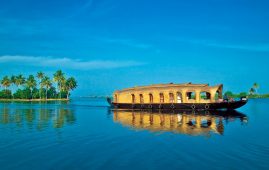
THIRUVANANTHAPURAM:Giving a major fillip to tourism,.

THIRUVANANTHAPURAM:Kerala has netted investment commitments of.

THIRUVANANTHAPURAM:What began as a brief moment.

THIRUVANANTHAPURAM:Industries Minister P Rajeeve, leading Kerala’s.

THIRUVANANTHAPURAM:Kerala Travel Mart (KTM), India’s largest.

KOCHI:Union Minister of State for Fisheries,.

THIRUVANANTHAPURAM:A 2012 order issued by the.

KOCHI: Professor S Varghese, former member.

KOCHI: Museums and art galleries are.

KOCHI: The first International Spice Routes.
