





KOTTAYAM:
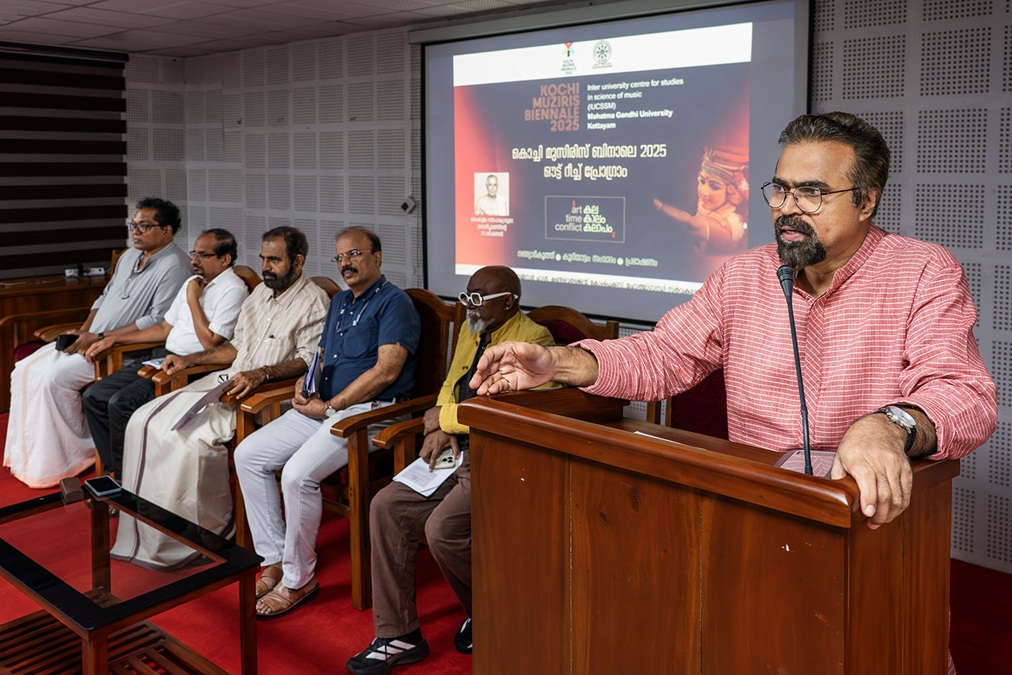
A cultivated impression of sacredness around classical arts is hindering their wider appreciation even as elements of modernity are gifting them new sensibilities, a seminar by the Kochi Biennale Foundation (KBF) noted today.
The traditional veil of opacity around traditions such as Koodiyattam and Kathakali should be lifted, and both arts warrant pedagogy in tune with the new age, experts said at an outreach programme in the run-up to the sixth edition of the Kochi-Muziris Biennale (KMB-6) at Mahatma Gandhi University here.
As of now, the two leading classical theatres have students emerging from imitation of their gurus and repetition of the lessons, thus making innovation scarce, according to Dr B. Ananthakrishnan, Vice-Chancellor of Kalamandalam Deemed-to-be-University. “Novelties in the arts should ideally happen by design, not by default. We need to reframe teaching methods to ensure it,” he pointed out at a talk in the day-long event titled ‘Encore’.
Today marked the first event in the series ‘Art..Time..Conflict’ curated by scholar-activist Keli Ramachandran as part of KMB’s outreach programme, organised by the Kochi Biennale Foundation in association with the Inter University Centre for Studies in Science of Music (IUCSSM).
Koodiyattam, which is almost two millennia old and is the world’s most ancient surviving Sanskrit theatre, can flourish in “secular” spaces that provide the art a natural context with audiences from several cultures, opined Dr Ananthakrishnan. “The same form, when staged in their traditional space in temple precincts (Koothambalam), is less likely to spur innovativeness,” he added.
When poet Vallathol Narayana Menon founded Kalamandalam in 1930, the underlying spirit was to bring the region’s classical arts beyond their traditional audiences and practitioners. “The institution forming a Koodiyattam department in 1965 was an extension of this mission. But, somewhere down the line, Kalamandalam lost that steam,” the VC said. “It’s time we redeemed it.”
Cultural activist Dr Aju K. Narayanan, who teaches at the School of Letters under MG University, said modernism has been propelling Kerala’s classical performing traditions in this century as an after-effect of the reformation movement in the state. “In the West, Renaissance meant revivalism. Unlike that, here it has given us a fresh spirit of contemporariness,” added the speaker, who is also a folklorist and film scholar.
Substantiating his point, Dr Narayanan pointed out how the structure and aesthetics of a preceding session carried modernism in a show of Nangiarkoothu, a solo female theatre that evolved one-and-a-half millennia ago as an offshoot of Koodiyattam. Dr Kalamandalam Krishnendu portrayed an array of mythological characters in ways appealing to the new generation in her experimental production called ‘Gandhari’ from the Mahabharata, he added.
Subsequently, five senior Koodiyattam exponents were felicitated, as the first batch of students when Kalamandalam started the department under the legendary Painkulam Rama Chakyar. Veteran actors Kalamandalam Sivan Namboothiri, Rama Chakyar (Junior), Girija and Shylaja, besides mizhavu percussionist Easwaranunni, also recalled the contributions of their master (1905-80). The colloquium was followed by their informal performances.
Earlier, the KMB outreach series was inaugurated by MG University Vice-Chancellor Prof C.T. Aravindkumar. KMB President Bose Krishnamachari was the Guest of Honour.
IUCSSM Director Prof. Jayachandran K. presided over the session, which also featured other speakers, including MG University Syndicate Member Adv. Reji Zachariah and Dr Biju P.R., who is in charge of the varsity’s College Development Council. Keli Ramachandran welcomed the gathering, while Dr Harikumar S. of the School of Letters proposed thanks. Another event in the series, titled ‘Creolization’, will be held at Christ College, Irinjalakuda, on 7th November.
The 109-day KMB-6 has artworks curated by Nikhil Chopra with HH Art Spaces, Goa. The show will begin on December 12. KBF is a 2010-registered non-profit charitable trust.


more recommended stories

KOCHI:A quiet but devastating story of.

KOCHI:Each handmade Manchaha (from the heart).

KOCHI:The current assessment of Kochi’s vulnerability.

KOCHI:Former Lok Sabha member Subhashini Ali.

KOCHI:The Students’ Biennale at St Andrew’s.

KOCHI:A three-day Terracotta & Wheel Pottery.

KOCHI:A four-day ‘Soil Assembly’ conference began.

NEW DELHI:Showcasing Kerala as an experiential.

KOCHI:On entering the room, the viewer.

KOCHI:Thai visual artist and documentary filmmaker.
