





KOCHI:
The spectators burst into peals of laughter after each puppet play as they grasped the embedded layers of meaning of fundamental human instincts at the ABC Glove Puppetry Workshop, Hands that Tell Stories, facilitated by renowned puppeteer Anurupa Roy.
The workshop was held in Art Room, Pavilion, Bastion Bungalow, Fort Kochi, an event of the ongoing sixth edition of Kochi-Muziris Biennale (KMB).
Pairs of participants presented human, animal and other forms animating simple yet thought- provoking themes of love, friendship, sharing, caring, freedom, restrictions, gossip- mongering, love for nature and even a comic interpretation of the workshop, through the language of facial features, tone and body — a twitch of the eyebrows or moustache, a smile, scowl, grimace and what not by manoeuvring their fingers.
The ancient theatre form came alive in their hands sending messages at metaphoric and subliminal levels on what it means to be human.
“It was a fantastic session. Glove puppetry is not easy and the shows were good. The participants from different walks of life and age groups worked hard, supporting each other in designing, making and animating their puppets. They scripted quirky, fun short pieces in two- and-half-days, in Ala Centre for Culture and Alternative Education followed by the presentation at the Biennale,” said Anurupa, who hails from New Delhi.
Anurupa’s love for dolls began at six, her grandmother being a doll maker. Her skills in spinning yarns led to setting up Katkatha Puppet Arts Trust in 1998 when she was just 19.
“We are a touring puppet theatre company with a core team of eight full-time puppeteers, some focusing on children and others on large shows for adults. Training is a main component and we run a master class every year to train people in puppetry techniques. We have an incubation lab too where we conduct fortnight-long residential training. Our last one had puppeteers from Turkey, Venezuela, and The Netherlands,” she said.
Katkatha takes at least a year to create a puppet show. “Our latest is ‘Oranges Juice’, a glove puppetry based on Agatha Christie’s, And Then There Were None. We are gearing up for the Chicago International Puppet Theatre Festival this month and Quebec fest in March,” she pointed out.
Katkatha features rod puppetry, string or marionette, and shadow puppetry of various sizes, human and giant besides Bunraku (Japan’s sophisticated traditional puppet theatre) practices.
All the 26 participants, including Ala founder Manu Jose, were thrilled to stage a show. “Puppetry is a kind of belief built on the foundation of disbelief. People have belief in an actor, but believing a stylised animated form is a way of awakening the child in you, my quest over the last few decades, and I am happy to have collaborated with this event that helps keep alive the child in us,” said Manu Jose who led ABC initially.
His son Izad, a no-schooler, learns everything from Ala, nature and things around him. “It was a good experience. It looked easy, but moving your fingers and hands in particular directions was tough. We put the first finger in the puppet’s head and thumb and middle finger in the arms and made it act. We had to stitch the costumes to perfect fit,” he said.
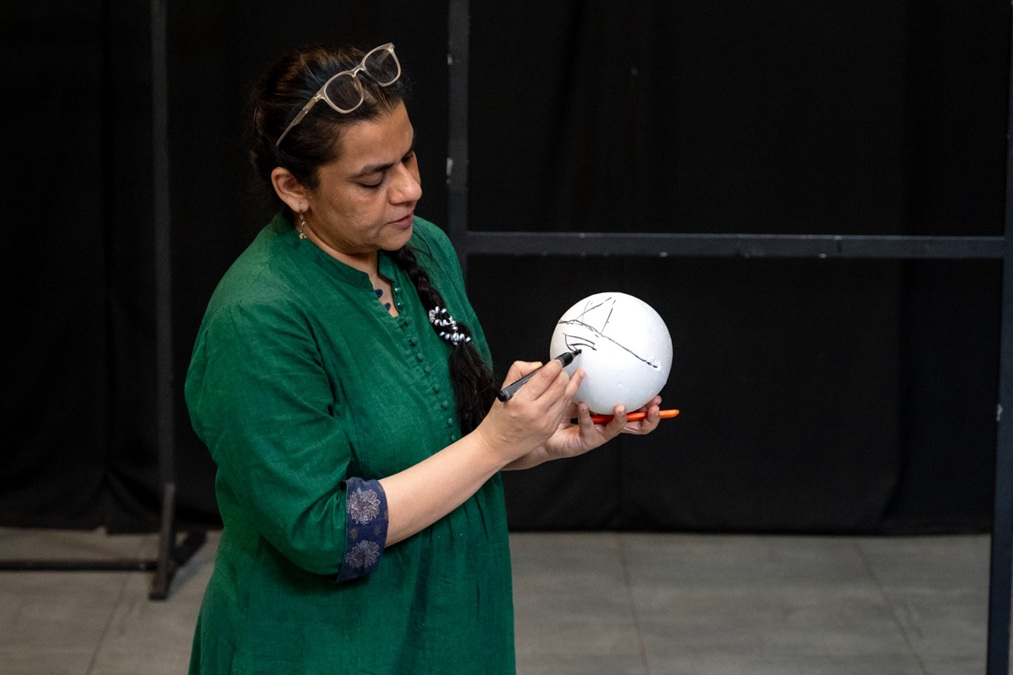
Balasaraswati, another no-schooler, agreed with Izad. “It was interesting. We carved the puppets from thermocol and layered it with papier-mâché, painted and coloured them.” Children took to it quickly, free of inhibitions, said Anurupa. According to Ajithlal Shivlal, a theatre artist, mostly into clowning, the workshop was challenging.
However, curiosity about puppetry drew Ashif to the workshop. “It’s not about what we make but what we do. It involves hard and painful finger and hand exercises and basic movements. After learning the basics, it was easier to improvise, an enriching yet tedious experience,” he said.
For general physician Priyanka Garg from Bengaluru, puppetry was her third ABC workshop. “I was clueless till I conceived the idea and crafted the puppet with the facilitator’s help. It came out well with a bit of practice and courage, and the facilitator’s confidence and encouragement were very helpful,” she said.


more recommended stories

KOCHI: At the Kochi-Muziris Biennale, Pallavi.

KOCHI: The Kochi Biennale Foundation (KBF),.

KOCHI: At first glance, Himanshu Jamod’s.

KOCHI:The crescent moon is a recurring.

KOCHI:At the Kochi-Muziris Biennale KMB), Ali.

KOCHI:An array of celebrities from different.

KOCHI:Few might have considered that kitchen.

KOCHI:Algerian artist Kader Attia has opined.

KOCHI:Paul Thoppil, Canada’s High Commissioner to.

KOCHI:It’s all in the gaze in.
